
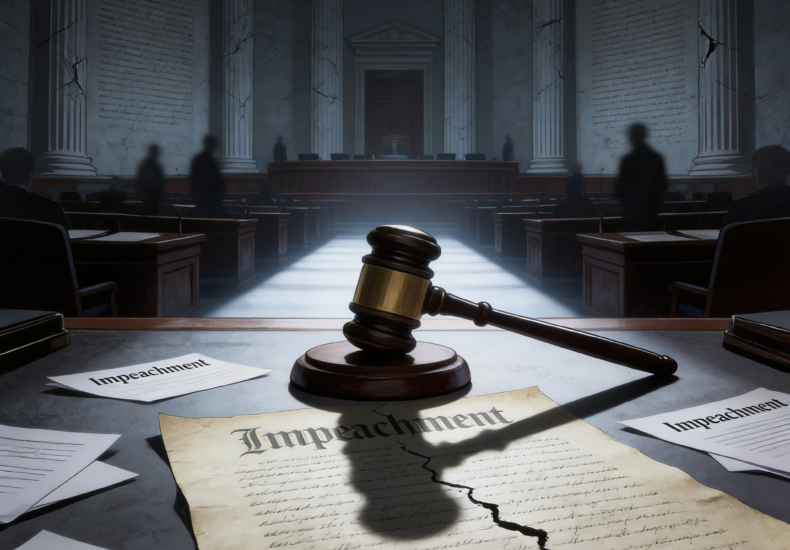
The Politics of Impeachment


Analytical Studies & Perspectives of Roldan G. Gorgonio
What happens to the credibility of legislative bodies when impeachment is perceived as a partisan retaliation?
From Protecting Democracy to Playing Politics
The traditional view of impeachment frames it as a vital instrument of constitutional hygiene. In this idealized model, the process serves as an ultimate safety valve designed to protect the state from egregious executive and judicial overreach. However, a critical reading of contemporary political histories in the United States and the Philippines reveals a more troubling reality. Impeachment is increasingly deployed as a primary mechanism of “lawfare”—the tactical use of legal systems to embarrass, destabilize, and neutralize political competitors.
Rather than executing a neutral assessment of an official’s fitness for office, modern impeachment processes frequently function as tools of autocratic legalism. Ruling elites utilize these constitutional provisions to consolidate power, bypass regular democratic competition, and enforce partisan discipline. Even when these proceedings end in acquittal, the structural fallout leaves an official’s career and the broader democratic fabric permanently damaged. The process itself becomes the punishment.
                      ┌────────────────────────────────────────┐
                      │    Initiation of Impeachment Charges   │
                      └───────────────────┬────────────────────┘
                                          │
                                          ▼
                      ┌────────────────────────────────────────┐
                      │    The "Nuclear Strike" of Lawfare     │
                      │  (Posner, 1999; McCarthy, 2014)        │
                      └───────────────────┬────────────────────┘
                                          │
                  ┌───────────────────────┴───────────────────────┐
                  ▼                                               ▼
┌───────────────────────────────────┐           ┌───────────────────────────────────┐
│     Extraconstitutional Attrition │           │       Governing Paralysis         │
│  • Coercive Resignations          │           │  • Forced Policy Concessions      │
│    (Monaghan et al., 2024)        │           │    (Whittington, 2024)            │
│  • Threat of Disqualification     │           │  • Administrative Distraction     │
│    (Gerhardt, 2000)               │           │    (Tribe, 2018; Matz, 2025)      │
└─────────────────┬─────────────────┘           └─────────────────┬─────────────────┘
                  │                                               │
                  └───────────────────────┬───────────────────────┘
                                          │
                                          ▼
                      ┌────────────────────────────────────────┐
                      │     Post-Trial Perpetual Jeopardy      │
                      │  • Loss of Moral Authority (Posner)   │
                      │  • Subsequent Prosecution (Shea, 2006) │
                      └────────────────────────────────────────┘
—
Impeachment as Public Drama, Not Justice
Impeachment is a nuclear strike. Legal scholar Andrew McCarthy characterizes the tool as a grave remedy designed to portray target conduct as a fraud on the public and an offense against the governing fabric (McCarthy, 2014). Because it is characterized by revelation, investigation, and prosecution, it subjects the target to an unlovely form of political combat (Posner, 1999). This combat is rarely waged to secure objective justice. Instead, it operates as a highly visible, performative theater designed to shift public perception long before a formal vote is ever cast.
By transforming complex legal standards into televised political propaganda, dominant congressional coalitions systematically erode the legitimacy of independent offices (Monaghan et al., 2024; Kusek, 2004). The weaponization of this process is evident in the 2025–2026 impeachment saga of Philippine Vice President Sara Duterte. Analysts and legislators observed that the legislative committee hearings functioned primarily to degrade the Vice President’s public trust and compromise her prospective 2028 presidential candidacy (Inquirer News, 2026b). The legal outcome of the trial became secondary to the immediate goal of political containment.
This dynamic highlights a fundamental systemic vulnerability. Although the process is legally structured to demand high thresholds of proof, the trial of public opinion operates on a lower, more emotional standard. Impeachment serves as a public “truth-telling” mechanism (Inquirer News, 2026d). During these proceedings, unverified or highly selective negative testimony is broadcast directly to the electorate. For political adversaries, the objective is not necessarily to secure the two-thirds Senate majority required for conviction. The objective is to permanently damage the official’s public brand.
—
Political Bullying Through Impeachment Threats
The mere threat of an impeachment inquiry can serve as a highly effective instrument of political extortion. It allows ruling coalitions to force targeted officials from office without having to endure the scrutiny of a formal trial. Many officials facing the specter of impeachment choose to resign before a formal accusation is even introduced (Monaghan et al., 2024; Kusek, 2004). This pre-trial attrition represents a clear victory for weaponized lawfare, achieving the political removal of an opponent while bypassing the constitutional burden of proof.
       Lawfare Threat                       Coercive Consequence
┌──────────────────────────┐             ┌──────────────────────────┐
│ Speculative Impeachment  ├────────────>│  Pre-empted Resignation  │
│       Allegations        │             │   (Monaghan et al., 2024)│
└──────────────────────────┘             └──────────────────────────┘
┌──────────────────────────┐             ┌──────────────────────────┐
│ Institutional Pressures  ├────────────>│ Forced Budget/Policy Shifts│
│   on Judicial Independence│             │   (Whittington, 2024)    │
└──────────────────────────┘             └──────────────────────────┘
This dynamic is particularly dangerous when applied to the judiciary. Political factions frequently hold the threat of impeachment over the heads of independent judges to convince them to resign rather than retire, occasionally using pension eligibility as leverage (Whittington, 2024). When the judiciary is subjected to such pressures, the separation of powers is fundamentally compromised.

Historical precedents illustrate how effectively this sword of Damocles can force resignations:
* The United States (1974): President Richard Nixon resigned before formal charges could be voted on by the full House of Representatives, ending his public career under intense pressure.
* The Philippines (2011): Ombudsman Merceditas Gutierrez resigned just days before her scheduled Senate trial, succumbing to the immense institutional and personal strain of the looming proceedings.
In both instances, the target chose self-preservation over a prolonged public trial, demonstrating that the threat of impeachment alone can alter a nation’s political landscape.
—
Government Held Hostage by Impeachment Politics
When an official chooses to fight rather than resign, the resulting institutional conflict often paralyzes the state. For a prolonged period, senior decision-makers are diverted from the ordinary business of governing (Tribe, 2018). The executive branch is forced to pivot from administering public policy to executing a continuous, high-stakes campaign for political survival.
This governing paralysis manifests in several distinct ways:
1. Administrative Distraction: Senior officials must devote significant time and resources to an internal crisis of governance rather than to shaping and administering public policy (Matz, 2025; Tribe, 2018).
2. Legislative Gridlock: The polarization generated by the proceedings routinely stalls key legislative and economic reforms (Valderama, 2026).
3. Diminished Capability: Distracted leaders struggle to deliver on basic administrative mandates, leaving them open to charges of systemic ineffectiveness (Matz, 2025).
To survive this gridlock, targeted officials are often forced to make compromises that weaken their office. The accused may be forced to implement:
* Sweeping changes in senior administrative personnel (Whittington, 2024);
* Restructuring of office budgets and operational practices (Whittington, 2024);
* Changes in institutional arrangements and policy directions (Whittington, 2024).
These forced concessions effectively strip the targeted official of their political leverage, leaving them vulnerable to future political maneuvers.
—
Why Surviving Impeachment Isn’t Really Surviving
The damage inflicted by an impeachment proceeding does not end with an acquittal. In a highly polarized political environment, a Senate acquittal is rarely viewed as a genuine vindication. Instead, the public often dismisses the outcome as a partisan “political rescue,” which can spark public protests and deepen institutional distrust (Inquirer News, 2026c).
Even when an official retains their office, their moral authority has often oozed away, leaving a skeptical public largely indifferent to their political survival (Posner, 1999). This erosion of legitimacy permanently damages the official’s ability to rebuild political support or advance a policy agenda (Whittington, 2024).
Furthermore, the target remains in perpetual legal jeopardy:
┌─────────────────────────────────────────────────────────────────┐
│                    Senate Trial Acquittal                       │
└────────────────────────────────┬────────────────────────────────┘
                                 │  Lack of Double Jeopardy
                                 ▼
┌─────────────────────────────────────────────────────────────────┐
│             Persistent Post-Trial Vulnerabilities               │
│                                                                 │
│  • Criminal Prosecutions in Regular Courts (Posner, 1999)       │
│  • Civil and Administrative Liabilities (MindaNews, 2025)       │
│  • Weaponized Investigative Dossiers as Prosecutorial Blueprints│
└─────────────────────────────────────────────────────────────────┘
Because impeachment is a unique political process aimed solely at removal and disqualification, an acquittal does not trigger double jeopardy protections. The official remains subject to the ordinary processes of law and remains liable to indictment and punishment in the ordinary course of criminal justice (Posner, 1999).
The investigative records, testimony, and evidence compiled during the inquiry remain in the public record, serving as a blueprint for subsequent criminal or civil actions (MindaNews, 2025). In the Philippines, the aborted 2001 impeachment trial of President Joseph Estrada provided the foundational evidence used by the Sandiganbayan to subsequently arrest, prosecute, and convict him for plunder (MindaNews, 2025).
Finally, the distinct penalty of permanent disqualification from public office is increasingly used as a preemptive strike to eliminate competitive candidates from future elections (Gerhardt, 2000; Whittington, 2024). When the primary goal of an impeachment inquiry is to bar an individual from future office, the process ceases to function as a tool of constitutional accountability and becomes an instrument of selective political exclusion.
—
Rethinking How We Study Political Trials
A critical evaluation of current academic literature reveals a major limitation: standard analyses are often built on an idealized, non-partisan model of constitutional design. Proponents of the process argue that these high-stakes career risks are necessary to enforce public trust and deter the abuse of power. This perspective assumes that legislative bodies will act as neutral, objective arbiters of the public interest.
This assumption is increasingly difficult to defend in highly polarized political environments. When political bodies are highly partisan, constitutional checks are easily reduced to performative political propaganda (Monaghan et al., 2024; Kusek, 2004). By reducing complex legal questions to hyperbole and public spectacle, modern impeachments can weaken the relevance of honor, integrity, and shame as standard considerations for public office (Tribe, 2018).
Future comparative research should focus on the long-term systemic impact of these proceedings on young democracies. Specifically, researchers need to examine how the frequent use of the impeachment power correlates with democratic backsliding, the decline of judicial independence, and the rise of autocratic legalism. Only by examining these dynamics can we understand the real cost of converting constitutional safeguards into weapons of political combat.
—
References
Arugay, A. A. (2025, March 10). A Return to Political Chaos? The Philippines’ Impeachment Saga. Fulcrum. https://fulcrum.sg/a-return-to-political-chaos-the-philippines-impeachment-saga/
Asia News Network. (2026, February 11). Philippine Congress junks President Marcos impeachment raps. Asia News Network. https://asianews.network
Asia Sentinel. (2026, June 03). Crisis in Manila: The Senate, the Dynasties, and 2028. Asia Sentinel. https://www.asiasentinel.com
Banoc, R. F. (2026, May 26). Impeachment as Political Weapon? The Bigger Picture nga Wala Makita sa Kadaghanan. Straight to the Point. https://www.youtube.com/watch?v=AttyRuphilBanoc
Bipartisan Policy Center. (2024, March 14). Our politics of impeachment and consequences for democracy. Bipartisan Policy Center. https://bipartisanpolicy.org/blog/our-politics-of-impeachment-and-consequences-for-democracy/
Brennan Center for Justice. (2021, November 30). When Impeachment Fails. Brennan Center. https://www.brennancenter.org/our-work/analysis-opinion/when-impeachment-fails
Brookings Institution. (2017, May 23). The political risks of impeachment. Brookings. https://www.brookings.edu/articles/the-political-risks-of-impeachment/
CBCPNews. (2025, August 30). Opinion | The impeachment process can radically change Philippine politics. CBCPNews. https://cbcpnews.net/cbcpnews/the-impeachment-process-can-radically-change-philippine-politics/
Cole, T. (2019, December 24). Impeachment is not a political weapon. House.gov. https://cole.house.gov/media/weekly-columns/impeachment-not-political-weapon
Daily Tribune. (2025, February 5). Impeachments then and now: Erap, Corona, and VP Sara. Daily Tribune. https://tribune.net.ph/2025/02/05/impeachments-then-and-now-erap-corona-and-vp-sara
Daily Tribune. (2026, February 02). Judicial overreach or legislative excess? Daily Tribune. https://tribune.net.ph
Daily Tribune. (2026, May 26). Impeachment can be quickly killed. Daily Tribune. https://tribune.net.ph
Democratic Erosion Consortium. (2022, February 25). The Constitution’s double-edged sword: Impeachment. Democratic Erosion Consortium. https://www.democraticerosion.com/2022/02/25/the-constitutions-double-edged-sword-impeachment/
Digest.ph. (2025, August 27). The impeachment process in the Philippines (2025): A brief legal overview. Digest.ph. https://www.digest.ph
DivinaLaw. (2025, August 29). The impeachment debate and the Constitution we trust. DivinaLaw. https://www.divinalaw.com
DivinaLaw. (2025, August 29). The impeachment debate and the Constitution we trust. DivinaLaw. https://www.divinalaw.com/the-impeachment-debate-and-the-constitution-we-trust/
Gerhardt, M. J. (2017, May 16). An impeachment should not be a partisan affair. Lawfare. https://www.lawfaremedia.org/article/impeachment-should-not-be-partisan-affair
Ginsburg, T., Huq, A., & Landau, D. (2021, n.d.). The uses and abuses of presidential impeachment. Chicago Unbound. https://chicagounbound.uchicago.edu/journal_articles/9924
GMA News Online. (2026, June 02). Philippine VP Sara Duterte camp wants impeachment case dismissed over ‘infirmities’. GMA News Online. https://www.gmanetwork.com
Harvard Law School. (2023, June 1). Impeachment, Disqualification, and Human Rights. Harvard Law Review. https://harvardlawreview.org/print/vol-136/impeachment-disqualification-and-human-rights/
Heritage Foundation. (2019, July 29). The impeachment process: The Constitution and historical practice. The Heritage Foundation. https://www.heritage.org/the-constitution/report/the-impeachment-process-the-constitution-and-historical-practice
Heritage Foundation. (2019, September 26). How the Impeachment Process Works. The Heritage Foundation. https://www.heritage.org/constitution/commentary/how-the-impeachment-process-works
IBON Foundation. (2025, July 16). Impeachment supports economic development. IBON Foundation. https://www.ibon.org/impeachment-supports-economic-development/
Inquirer Opinion. (2012, March 26). Betrayal of public trust. Inquirer.net. https://opinion.inquirer.net/25619/betrayal-of-public-trust
Inquirer Opinion. (2018, June 10). Impeachment as a tool for authoritarian politics. Inquirer.net. https://opinion.inquirer.net/113821/impeachment-as-a-tool-for-authoritarian-politics
Inquirer Opinion. (2026, June 01). When political theater replaces legislative duty. Inquirer.net. https://opinion.inquirer.net
Inquirer Opinion. (2026, May 25). Impeachment or Political Theater? Inquirer.net. https://opinion.inquirer.net/174123/impeachment-or-political-theater
Kalt, B. C. (2022, October 28). Impeachment and Its Discontents. Missouri Law Review. https://scholarship.law.missouri.edu/mlr/vol87/iss3/9
Kusek, J. Z., & Rist, R. C. (2004). Ten Steps to a Results-Based Monitoring and Evaluation System: A Handbook for Development Practitioners. The World Bank. https://doi.org/10.1596/0-8213-5670-0
Kusek, J. Z., & Rist, R. C. (2004). Ten Steps to a Results-Based Monitoring and Evaluation System: A Handbook for Development Practitioners. The World Bank. https://doi.org/10.1596/0-8213-5670-0
Letcher (Editor), T. M. (2018). Managing Global Warming: An Interface of Technology and Human Issues. Academic Press. https://doi.org/10.1016/C2017-0-01028-5
Letcher, T. M. (Ed.). (2018). Managing Global Warming: An Interface of Technology and Human Issues. Academic Press. https://doi.org/10.1016/C2017-0-01028-5
Manila Bulletin. (2026, June 3). EXPLAINER: Why VP Sara wants Senate to junk her impeachment case. Manila Bulletin. https://mb.com.ph/2026/06/03/explainer-why-vp-sara-wants-senate-to-junk-her-impeachment-case/
Manila Times. (2026, May 25). Impeachment, politics and the Senate on trial. The Manila Times. https://www.manilatimes.net/2026/05/25/opinion/columns/impeachment-politics-and-the-senate-on-trial/194856
McCarthy, A. C. (2014). Faithless Execution: Building the Political Case for Obama’s Impeachment. Encounter Books. https://doi.org/10.2139/ssrn.2380193
Miller Center. (2021, January 1). Impeachment. Miller Center of Public Affairs. https://millercenter.org/impeachment
MindaNews. (2025, June 15). Impeachment as Political Tool: What might impeachment mean for the stability of institutions. MindaNews. https://www.mindanews.com/commentary/2025/06/impeachment-as-political-tool/
MindaNews. (2025, June 27). Beyond the bend: Conviction or acquittal, no dismissal. MindaNews. https://www.mindanews.com
NDVLaw. (2025). Understanding Impeachment in the Philippines: A Complete Guide. NDVLaw. https://ndvlaw.com/understanding-impeachment-in-the-philippines/
Neil H. Buchanan – Justia’s Verdict. (2021, January 28). Impeaching a Former President Is Plainly Constitutional. Justia. https://verdict.justia.com/2021/01/28/impeaching-a-former-president-is-plainly-constitutional
Ombudsman. (2026). 1987 Constitution of the Philippines (Article XI) Accountability of Public Officers. Ombudsman.gov.ph. https://www.ombudsman.gov.ph/1987-constitution-of-the-philippines-article-xi-accountability-of-public-officers/
Oreta, J. S. (2026, May 25). Impeachment or political theater? Inquirer Opinion. https://opinion.inquirer.net/193245/impeachment-or-political-theater
PBS NewsHour. (2024, January 13). Expert analyzes the rise of impeachment as a weapon of partisan politics. PBS. https://www.pbs.org/newshour/show/expert-analyzes-the-rise-of-impeachment-as-a-weapon-of-partisan-politics
Philippine Daily Inquirer. (2012, June 03). Trial cost, P3.5M; removing a chief justice, priceless. Inquirer News. https://newsinfo.inquirer.net
Philippine Daily Inquirer. (2026a, May 25). Impeachment or political theater? Inquirer Opinion. https://opinion.inquirer.net
Philippine Daily Inquirer. (2026b, May 09). Impeach case will affect Sara Duterte’s 2028 presidential bid — Luistro. Inquirer News. https://newsinfo.inquirer.net
Philippine Daily Inquirer. (2026c, May 08). Lawyer: People may protest if Senate acquits VP despite glaring proof. Inquirer News. https://newsinfo.inquirer.net
Philippine Daily Inquirer. (2026d, June 02). UP law prof: Impeachment is truth-telling, not a judicial process. Inquirer News. https://newsinfo.inquirer.net
Posner, R. A. (1999). An Affair of State: The Investigation, Impeachment, and Trial of President Clinton (Vol. 44). Harvard University Press. https://doi.org/10.2307/3113836
Posner, R. A. (1999). An Affair of State: The Investigation, Impeachment, and Trial of President Clinton (Vol. 44). Harvard University Press. https://doi.org/10.2307/3113836
Rackey, J. D. (2024, March 14). Our politics of impeachment and consequences for democracy. Bipartisan Policy Center. https://bipartisanpolicy.org
Respicio & Co. Law Firm. (2025, October 31). Judicial Review and Justiciability in Impeachment Cases: Did the Supreme Court Overreach? (Philippines). Respicio & Co. Law Firm. https://www.respiciolaw.com
Rubin, J. (2019, December 19). Impeachment will damage Trump – whether he is removed or not. Al Jazeera. https://www.aljazeera.com
S. Senate. (n.d.). About impeachment. United States Senate. https://www.senate.gov
Schiff, A. (2020). Impeachment: An Opening Argument. Knopf Doubleday Publishing Group. https://www.barnesandnoble.com/w/impeachment-adam-schiff/1136404781
Schiff, A. (2020). Impeachment: An Opening Argument. Knopf Doubleday Publishing Group. https://www.barnesandnoble.com/w/impeachment-adam-schiff/1136404781
SunStar. (2026, May 12). PDP-Laban warns lawmakers backing VP Sara impeachment. SunStar Philippines. https://www.sunstar.com.ph/manila/pdp-laban-warns-lawmakers-backing-vp-sara-impeachment
Supreme Court of the Philippines. (2025, July 25). SC: House impeachment complaint vs VP Duterte barred by 1-year rule, due process or fairness applies during all stages of impeachment process. Supreme Court of the Philippines. https://sc.judiciary.gov.ph/sc-house-impeachment-complaint-vs-vp-duterte-barred-by-1-year-rule/
Tabanao, E. G. (2019, n.d.). Political cynicism and political participation of voters in Negros Oriental, Philippines. ResearchGate. https://www.researchgate.net/publication/339123456PoliticalCynicismandPoliticalParticipationofVotersinNegrosOriental_Philippines
Tamase, P. S. (2025, February 07). Impeachment primer and frequently asked questions. University of the Philippines College of Law. https://law.upd.edu.ph
Tamase, P. S., & Presto, A. C. (2025, March 10). Impeachment a key weapon in the Philippines’ Marcos–Duterte divide. East Asia Forum. https://eastasiaforum.org/2025/03/10/impeachment-a-key-weapon-in-the-philippines-marcos-duterte-divide/
Tamase, P. S., Castro, J. A. N. M., Chua, J. R. R., Espino, E. J., & Mercado, R. D. (2025, February 7). Impeachment Primer and Frequently Asked Questions. University of the Philippines College of Law. https://law.upd.edu.ph/impeachment-primer/
The Manila Times. (2026, May 25). Impeachment, politics and the Senate on trial. The Manila Times. https://www.manilatimes.net
Tribe, L. H., & Matz, J. (2018). To End a Presidency: The Power of Impeachment. Basic Books. https://www.hachettebookgroup.com/titles/laurence-tribe/to-end-a-presidency/9781541644892/
United States Studies Centre. (2019, November 25). Impeachment: The insiders’ guide. United States Studies Centre. https://www.ussc.edu.au/analysis/impeachment-the-insiders-guide
University of Washington School of Law. (2024, July 02). The history of impeachment. UW School of Law. https://www.law.uw.edu
UP College of Law. (2025, August 1). Restoring Accountability. UP Law Faculty Joint Statement. https://law.upd.edu.ph/restoring-accountability/
Valderama, T. C. (2026, January 26). Impeachment, instability and the cost to Filipinos. VERA Files. https://verafiles.org
Washington University. (1930, January 1). Impeachment As a Remedy. St. Louis Law Review. https://openscholarship.wustl.edu/law_lawreview/vol15/iss3/
Whittington, K. E. (2024). The Impeachment Power: The Law, Politics, and Purpose of an Extraordinary Constitutional Tool (Vol. 141). Princeton University Press. https://doi.org/10.1093/psquar/qqaf146
Whittington, K. E. (2024). The Impeachment Power: The Law, Politics, and Purpose of an Extraordinary Constitutional Tool (Vol. 141). Princeton University Press. https://doi.org/10.1093/psquar/qqaf146
Wikipedia. (2026a). Impeachment in the Philippines. Wikipedia. https://en.wikipedia.org/wiki/Impeachmentinthe_Philippines
Wikipedia. (2026b). Impeachment of Renato Corona. Wikipedia. https://en.wikipedia.org/wiki/ImpeachmentofRenato_Corona
YouTube. (2026, February 09). Drilon: Impeachment trial is not a legal proceeding but a political process | ANC. YouTube. https://www.youtube.com
YouTube. (2026, June 02). Adiong welcomes ‘Bantay Senado,’ cites public’s role in VP Sara trial. Philippine News Agency / YouTube. https://www.youtube.com
Zapanta, L. K. (2026, May 26). Business groups urge Senate: Be objective in Duterte impeach trial. Inquirer Opinion. https://newsinfo.inquirer.net/1944321/business-groups-urge-senate-be-objective-in-duterte-impeach-trial
You may be interested
How Did Pledges Become a Reality
Assessing the President's Trip : From Pledges to Reality Analytical...
The Weaponization of Laws in Philippine Politics
The Weaponization of Laws in Philippine Politics Analytical Studies &...
Weaponized Impeachment and the Deepening Divide
Homepage Weaponized Impeachment and the Deepening Divide Analytical Studies &...
Leave a Reply